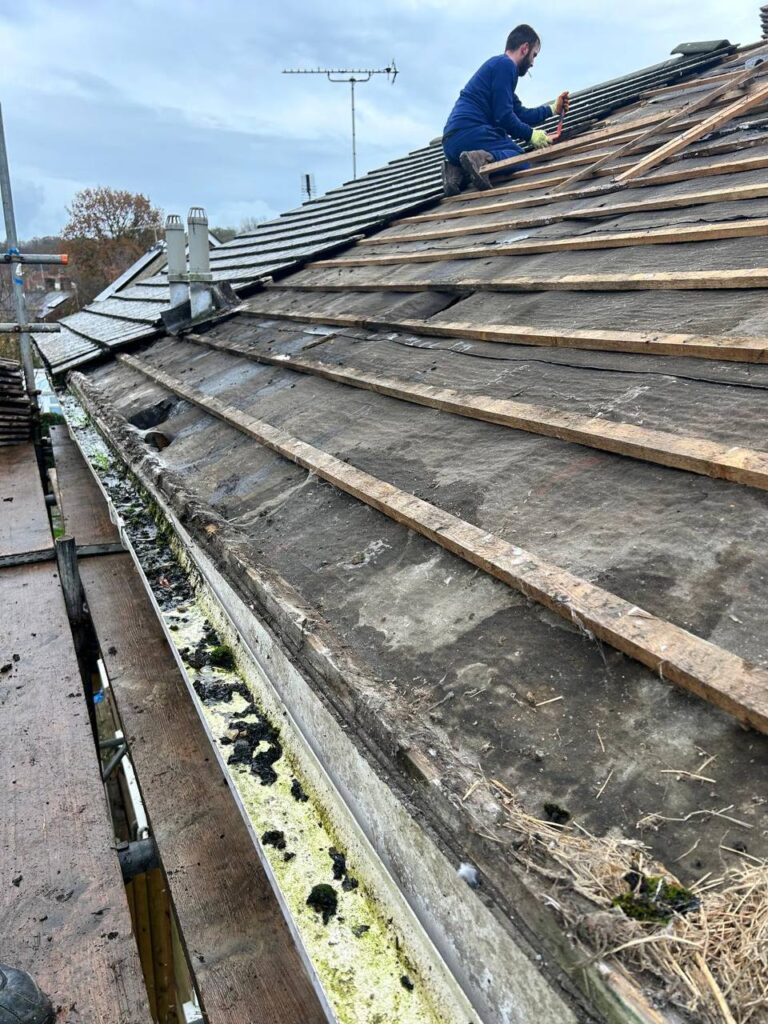
An older roof does not automatically need replacing simply because it shows signs of wear. Many roofs can remain serviceable for years when isolated defects are identified early and repaired correctly. The important question is whether the damage is confined to particular areas or reflects deterioration across the roofing system as a whole.
For property owners in Griston, Norfolk, a professional roof inspection can provide the evidence needed to make a sensible decision. The assessment should consider the roof covering, underlay, battens, flashing, fixings, drainage details and supporting structure rather than judging the roof by age alone.
How to Decide Whether an Older Roof Can Still Be Repaired
The suitability of a repair depends on the extent and cause of the problem. A small number of slipped tiles may require straightforward attention, whereas repeated leaks in several areas can indicate broader deterioration.
A useful inspection should establish:
- Where water or weather damage is entering
- Whether the problem is isolated or widespread
- What condition the surrounding materials are in
- Whether earlier repairs remain secure
- Whether the underlying structure is dry and stable
- If a repair is likely to provide a dependable result
These findings allow the proposed work to address the cause rather than simply covering the most visible symptom.
Signs That a Repair May Be Appropriate
Repair is often a practical option when most of the roof remains sound. Typical examples include a few slipped or cracked tiles, a localised flashing defect, damaged mortar around ridge tiles or an isolated weakness around a roof penetration.
A focused repair may also be suitable when the underlay and battens remain serviceable and there is no significant movement in the roof structure. In these circumstances, replacing damaged materials and reinstating the affected detail can restore weather resistance without disturbing sound sections.
When Years of Wear Become Widespread Deterioration
Roofing materials do not always age evenly. Areas exposed to greater wind, rain or shade may deteriorate sooner than more sheltered sections. Over time, however, several separate weaknesses may begin to develop at once.
Warning signs of widespread deterioration include:
- Frequent slipping or breakage across different roof slopes
- Recurring leaks despite previous repairs
- Large areas of deteriorated underlay
- Widespread loose or failed fixings
- Noticeable sagging or uneven roof lines
- Extensive deterioration around valleys, ridges and junctions
- Persistent dampness within the roof space
When several of these issues are present, further patch repairs may provide only temporary relief because the roof is no longer performing reliably as a complete system.
Why the Condition Beneath the Tiles Matters
Tiles or slates are only the visible part of a roof. Beneath them, the underlay provides secondary protection, battens support the covering and structural timbers carry the roof load.
An older roof may appear reasonable from ground level while its underlay has become brittle or its battens have deteriorated. Conversely, weathered tiles do not necessarily mean that the entire construction has failed. A proper assessment must therefore examine both the external covering and the concealed components wherever access allows.
The Importance of Repairing the Root Cause
Water staining does not always appear directly beneath the point where moisture enters. Water can travel along underlay, rafters or battens before reaching the ceiling, which makes diagnosis from inside the property alone unreliable.
For example, replacing a visibly damaged tile will not solve a leak caused by failed flashing further up the roof. Effective repair work should identify the route of moisture, remove unsuitable materials where necessary and reinstate the relevant roof detail correctly.
Repeated Repairs Can Reveal a Wider Pattern
A history of repairs does not necessarily mean the roof must be replaced. If previous defects were caused by separate, isolated events, further targeted work may still be sensible.
Concern arises when repairs repeatedly address similar failures or when new problems develop close to earlier work. This pattern can indicate that adjoining materials have reached a comparable stage of deterioration. Reviewing the roof as a whole can help determine whether another repair is likely to last or simply postpone a broader solution.
Why Timely Assessment Preserves More Options
Minor defects can spread when they remain exposed to repeated rainfall and changing weather conditions. A displaced tile may allow moisture to reach the underlay, battens and insulation. Damp timber and loosened materials can then enlarge the affected area.
Arranging an inspection when the first warning signs appear gives a roofer the best opportunity to preserve sound materials. Waiting until water is entering regularly can turn a manageable defect into a more extensive roofing problem.
Conclusion
An older roof may still be worth repairing when the damage is localised, the surrounding materials remain dependable and the supporting structure is sound. Replacement becomes more appropriate when defects are widespread, leaks keep returning or the underlying components have deteriorated across substantial areas.
Griston Roofing Services provides professional roof inspections and repairs in Griston, Norfolk. If your roof is showing signs of long-term wear, our team can assess its condition and explain the most suitable course of action without recommending more work than is necessary.
Call us on: 01603 249 398
Click here to find out more about Griston Roofing Services
Click here to complete our contact form and see how we can help with your roofing needs.