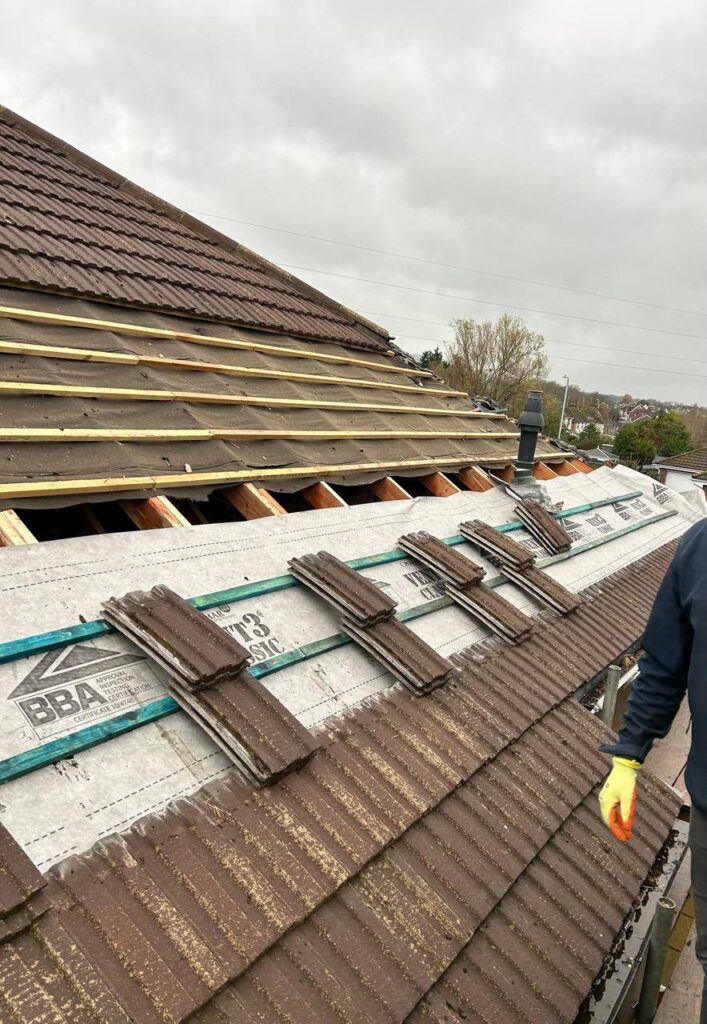
Replacing a roof is one of the most significant improvements that can be made to a property. Unlike a small repair, a roof replacement involves renewing the main protective covering and provides an opportunity to assess the components that have spent years concealed beneath it. Careful planning is therefore essential if the finished roof is to provide dependable, long-term protection.
For homeowners in Griston, Norfolk, planning a roof replacement should begin with understanding the condition of the existing roof and what the property actually requires. From assessing deterioration to choosing suitable roofing materials and preparing for installation, each stage contributes to the quality and performance of the completed roof.
Start by Understanding Why the Roof Needs Replacing
Before planning a replacement, it is important to establish whether one is genuinely required.
Many roofing problems can be resolved through targeted repairs when deterioration is confined to a particular area. A missing tile, isolated leak or localised flashing problem does not automatically mean the entire roof needs renewing.
Replacement becomes more relevant when problems are widespread or recurring.
Possible signs include:
- Roofing materials deteriorating across several areas
- Frequent slipped, cracked or missing tiles
- Recurring leaks in different locations
- Numerous previous repair areas
- Deterioration beneath the visible roof covering
- Increasing problems with fixings or supporting materials
- General loss of reliable weather protection
A professional assessment provides a much better basis for making the decision than the age or appearance of the roof alone.
Assess the Complete Roofing System
A roof is more than its visible tiles or slates.
Beneath the external covering are components that contribute to support and weather protection. Roof junctions, flashing, ridges, verges and other details also need to function correctly.
Planning a replacement therefore requires consideration of the complete roofing system.
An initial inspection can help determine which components remain serviceable and which areas need attention as part of the project.
Consider the Existing Roof Covering
The condition of the current tiles or slates provides useful information about how the roof is ageing.
One or two damaged materials may indicate isolated deterioration. Widespread cracking, slipping or weathering can suggest that the covering is becoming increasingly unreliable.
Homeowners may notice:
- Uneven roof lines
- Numerous replacement tiles
- Broken or cracked materials
- Gaps in the covering
- Sections that have visibly moved
- Debris that has fallen from the roof
These observations can help start the conversation, but detailed roof assessment should be carried out professionally rather than by attempting to access the roof yourself.
Think About the Problems Beneath the Surface
One of the advantages of replacing a roof is that removing the old covering provides access to areas that are normally hidden.
If an older roof has suffered repeated leaks, there may be deterioration beneath the tiles that cannot be properly assessed from outside.
Once the covering is removed, attention can be given to components such as the roofing underlay and battens, along with other accessible parts of the roof construction.
This is an important stage because a new roof covering needs an appropriate foundation beneath it.
Choose Roofing Materials With the Property in Mind
Selecting a new roof covering should not simply be about choosing something that looks attractive.
The roofing materials need to be suitable for the particular roof design and work effectively as part of the complete system.
Appearance still matters because the roof forms a substantial part of the exterior. A carefully selected covering can create a clean, consistent finish and complement the character of the property.
Professional guidance can help ensure practical performance and appearance are considered together.
Pay Attention to Roof Shape and Design
Not every roof replacement is identical.
A straightforward pitched roof may have different installation requirements from a roof containing multiple slopes, junctions or other architectural features.
The design determines how water needs to move across the roof and where particular attention may be required.
Planning should therefore consider:
- Roof pitch
- Junctions between different sections
- Ridge details
- Verge areas
- Valleys where present
- Changes in roof level
- Existing roof features
These details need to work together with the main covering to create a complete weather-resistant system.
Flashing and Leadwork Should Form Part of the Plan
Areas where the roof meets other features can be particularly important for keeping water out.
Flashing and leadwork are used to protect these vulnerable junctions. If these components have deteriorated alongside the old roof, they should be properly considered when planning replacement work.
There is little benefit in installing a new main covering while overlooking ageing details that could compromise its performance.
A well-planned roof replacement considers both the large visible areas and the smaller details around them.
Do Not Overlook the Roofline
Fascias, soffits and guttering sit around the edges of the roof and perform important functions.
The guttering manages rainwater leaving the roof, while fascias and soffits help finish and protect the roofline.
When planning a roof replacement, it is sensible to assess their condition at the same time.
This does not mean every roofline component automatically needs replacing. It simply provides an opportunity to identify whether any existing deterioration should be addressed while roofing work is taking place.
Consider How Rainwater Will Move Across the New Roof
Water management is fundamental to roof performance.
The shape and pitch of a roof are designed to direct rainfall down towards the roof edge, where the guttering takes over.
Roofing materials, junctions and flashing all need to support this process.
Careful installation ensures water follows the intended route rather than finding weaknesses through which it can penetrate beneath the covering.
Plan for Removing the Existing Roof
Roof replacement begins with taking away the old covering so that the underlying construction can be assessed and prepared.
This stage is important because it can reveal conditions that were previously hidden.
For example, an external roof may show obvious deterioration in only a few areas while removal reveals that supporting components require more attention than expected.
A professional roofing approach accounts for the need to inspect and prepare these areas before the new covering is installed.
Preparation Matters as Much as the Final Finish
The completed roof may look simple from outside, but much of the workmanship responsible for its performance becomes invisible once installation is finished.
Before the new tiles or slates are installed, supporting and protective components need to be prepared correctly.
This is similar to many construction projects: the visible finish can only perform properly when the structure beneath it has received appropriate attention.
Good roof replacement therefore focuses on every stage rather than rushing towards the final covering.
Understand the Importance of Correct Installation
Even high-quality roofing materials depend on correct installation.
Tiles or slates need to be appropriately positioned and secured, while ridges, edges, junctions and flashing details require careful workmanship.
The roofing system should operate as a whole.
A weakness in one small detail can undermine an otherwise well-constructed roof, which is why experienced installation is such an important part of replacement planning.
Think About Ventilation Where Relevant
Roof ventilation requirements can vary depending on the construction of the property and the roofing system.
Where ventilation forms part of the existing or replacement roof design, it needs to be considered during planning rather than treated as an afterthought.
Appropriate airflow can be an important part of managing conditions within the roof space.
A professional roofer can assess the roof construction and ensure relevant ventilation requirements are incorporated appropriately.
Decide Whether Repairs Are Still the Better Option
Planning a roof replacement should include an honest assessment of whether replacement is actually necessary.
Targeted repair may remain appropriate where:
- Damage is confined to a small area
- Most roofing materials remain serviceable
- Supporting components are sound
- Leaks have identifiable local causes
- Previous repairs remain stable
- There is no widespread deterioration
A new roof becomes more relevant where defects are recurring across numerous sections or where the existing system can no longer provide dependable protection through sensible local repairs.
Look at the Pattern of Previous Repairs
The repair history of a roof can reveal useful information.
An established roof may naturally have received occasional maintenance over the years. That alone is not a concern.
However, if repairs have become increasingly frequent and new defects continue appearing between previously repaired sections, the roof may be reaching a stage where individual interventions are no longer addressing its overall condition.
Replacement can provide an opportunity to move away from numerous ageing repair areas and create one consistent roofing system.
Prepare for a Professional Roof Assessment
Before replacement work is planned in detail, a professional inspection can establish the condition of the existing roof.
A useful assessment should consider:
- The condition of the tiles or slates.
- The distribution of existing defects.
- Previous repair areas.
- Signs of water penetration.
- Flashing and roof junctions.
- Ridge and edge details.
- Accessible supporting components.
- Roofline condition where relevant.
- Whether repair or replacement is the more appropriate approach.
This information creates a clearer basis for planning the work.
Why Professional Roof Replacement Matters
Replacing a roof requires more than removing old tiles and installing new ones.
The existing system needs to be assessed, underlying weaknesses identified and the replacement constructed so that all components work together.
Professional roofing workmanship provides particular value because problems can sometimes become fully apparent only after the old covering has been removed.
Experienced roofers can respond appropriately to the condition of the exposed roof and ensure preparation is completed before the new covering goes into place.
What Should the Finished Roof Achieve?
A professionally replaced roof should provide more than an improved appearance.
The completed roofing system should:
- Provide reliable weather protection
- Direct rainfall effectively
- Have secure and consistent roofing materials
- Incorporate properly finished roof details
- Address relevant underlying deterioration
- Create a neat and consistent exterior finish
- Suit the construction and design of the property
Planning around these objectives helps ensure the project focuses on long-term performance rather than appearance alone.
Roof Replacement Services in Griston
At Griston Roofing Services, we provide professional roofing, roof repairs and new roof services throughout Griston, Norfolk.
When a roof is showing widespread deterioration or requiring increasingly frequent repairs, assessing the complete roofing system is the first step towards determining whether replacement is appropriate.
Our approach focuses on understanding the condition of the existing roof, identifying what needs attention and ensuring that preparation and installation are treated as equally important parts of the project.
Conclusion
Planning a roof replacement begins long before the old covering is removed. The condition of the existing tiles or slates, underlay, battens, flashing, roof junctions and roofline all need to be considered so that the replacement addresses the actual needs of the property.
It is equally important to establish whether complete replacement is genuinely necessary. A sound roof with isolated defects may still be suitable for targeted repairs, while widespread or recurring deterioration can make a new roofing system the more appropriate solution.
For homeowners in Griston, Norfolk, Griston Roofing Services provides professional roof assessments, repairs and new roof installations. If your existing roof is showing its age and you are considering replacement, contact our team to arrange an assessment and discuss the most suitable way forward.
Call us on: 01603 249 398
Click here to find out more about Griston Roofing Services
Click here to complete our contact form and see how we can help with your roofing needs.